The screen answers back
Preview the generated UI before anyone argues about the diff.
Userface puts context, validation, live preview, and patch approval around AI UI generation, so the interface is never a black box.
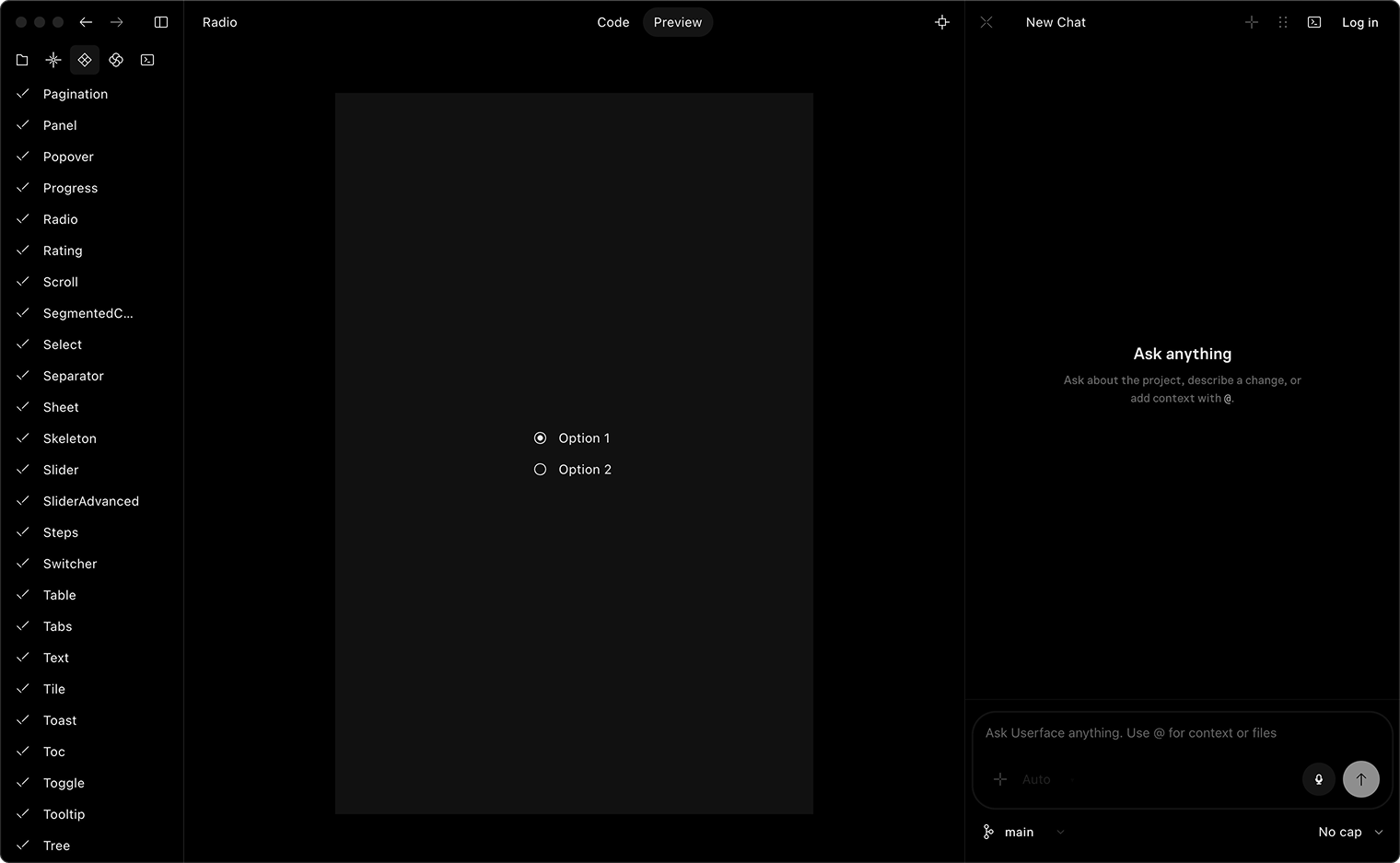
A coding agent can write files. Userface makes the generated interface visible, constrained, and reviewable before it touches your app.
Preview the generated UI before anyone argues about the diff.
Invalid props, bad composition, and contract drift show up where the work happens.
The patch waits until the interface earns it.
Ask for billing. Inspect the preview. Fix validation issues. Approve the patch only when the screen looks like it belongs in your product.
Loading, empty, error, payment-failed. Userface helps the agent handle the states teams usually discover too late.
Billing, settings, CRUD, admin, or component state work. Make the output visible before it becomes code review archaeology.